How to become a voice actor
By Buford Taylor, who runs Casting Call Club. Updated October 2026.
You don't need an agent, a degree or a studio to start voice acting. You need a quiet corner, a decent microphone and a lot of auditions. I've watched hundreds of thousands of people start on Casting Call Club, so here's what actually works, with the site's own numbers.
1. Start acting, not just talking
Voice acting is acting. A nice voice helps less than you'd think. What gets people cast is a read that sounds like a real character feeling a real thing.
- Read out loud every day. Books, comics, game dialogue, anything works. Try the same line angry, scared and bored.
- Take an acting class if you can. Community theater and improv count, and they're often cheap.
- Listen to your favorite voice actors. Notice where they breathe, where they get quiet, and how much they change between characters.
2. Set up somewhere quiet
Directors forgive a cheap mic. They don't forgive echo, traffic or a fan humming in the background. A closet full of clothes is the classic first booth, because soft stuff soaks up echo. Record close to the mic, about a hand's width away, with a pop filter in front.
For the mic itself, see the best microphones for voice acting. The short version: a budget USB mic is fine to start.
3. Learn basic editing
You'll record, trim and export your own auditions. Audacity is free and it's by far the most common tool on Casting Call Club profiles. Learn three things first: cutting out the gaps, removing background noise lightly, and exporting at a normal volume. Don't pile on effects. Directors want your clean voice.
4. Audition a lot
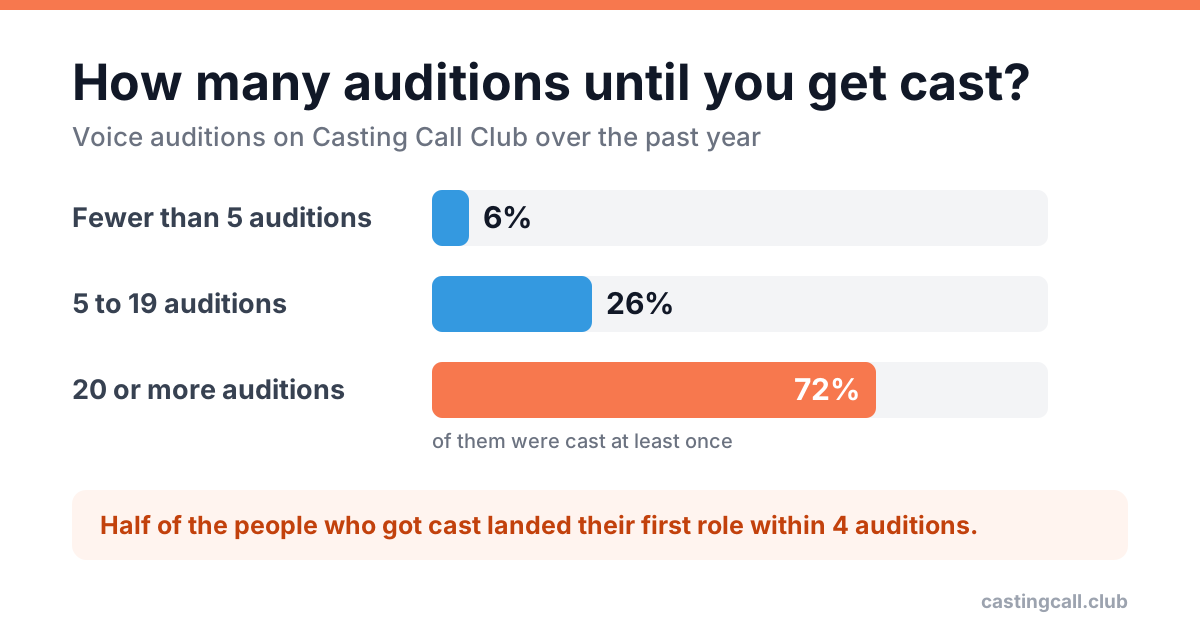
This is the part people skip. Getting cast is mostly a numbers game, and the numbers are pretty encouraging. Here's what happened to people auditioning for voice roles on the site over the past year:
| Auditions sent | Cast at least once |
|---|---|
| Fewer than 5 | About 6% |
| 5 to 19 | About 26% |
| 20 or more | About 72% |
And of everyone who did get cast, half landed their first role within their first four auditions. So send twenty before you decide you're bad at this.
5. Start with projects that cast beginners
Fan dubs, student films and hobby animations cast newcomers all the time, and they're far less crowded than paid roles. Fan dubs have the best odds of any of the big project categories on the site. If you're wondering whether working for free is worth it, I wrote up what the numbers say about unpaid voice acting.
6. Turn credits into a demo
Once you've got a few finished roles, cut your best moments into a short demo: about a minute, your strongest character first, no long intro. Put it on your profile so directors can hear you before they even open your audition.
7. Move toward paid work
Paid roles get far more auditions, so they're harder to land, but credits and a demo change that. When you're ready, check paid voice acting jobs and what voice actors actually make.
Ready to try? Every open voice acting role is waiting, and auditioning is free.