How much do voice actors make?
By Buford Taylor, who runs Casting Call Club. Updated October 2026.
The honest answer: most voice actors make very little from voice acting, a few make a living, and a tiny number get rich. Salary sites put the average somewhere around $48 an hour (ZipRecruiter, October 2026), but that number hides how the work is actually paid: per project, per line or per finished hour, and rarely every week. Here's what the indie side looks like, using what roles on Casting Call Club really offer.
What indie projects pay
Over the past year, roles on Casting Call Club split like this:
| Kind of role | Share of roles |
|---|---|
| Unpaid | 84% |
| Deferred (paid later, if the project earns) | 10% |
| Paid | 6% |
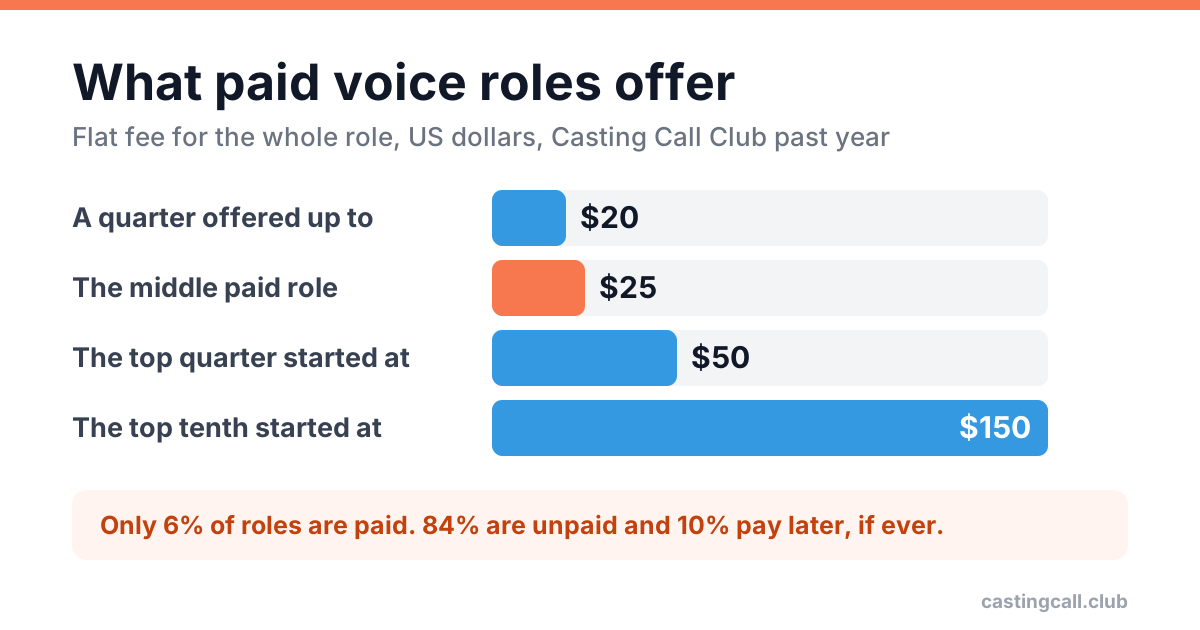
For paid voice roles with a flat fee in US dollars, here's what directors offered for the whole role:
| Flat fee per role | |
|---|---|
| A quarter of paid roles offered up to | $20 |
| The middle paid role | $25 |
| The top quarter started at | $50 |
| The top tenth started at | $150 |
Most of those roles are a handful of lines, so per hour of work they can be better than they look. Bigger parts in games and audiobooks pay more. The indie voice acting rates page breaks this down by craft and has suggested rates per line, per word and per hour.
Where the bigger money is
- Commercials and corporate work. Ads, explainers and training videos pay the most per minute, and most of it goes to people with a polished demo and a treated booth.
- Audiobooks. Usually paid per finished hour of audio. It's steady work if you can narrate for hours without sounding tired.
- Games. Indie games often pay per line or per session. Larger studios mostly cast through agents and union contracts.
- Animation. Professional TV and film animation is mostly union and agent-driven. Indie animation is where most people get their start.
Why most people earn so little at first
Paid roles are crowded. A typical paid voice role on the site gets about 19 auditions, and a typical unpaid one gets 1 or 2. So most voice actors spend their first stretch on unpaid and hobby projects, building credits and a demo, and treat voice acting as a side gig for years before it pays real money. That's normal, not a sign you're doing it wrong.
How to earn more
- Get your audio clean. A quiet room and a decent mic put you ahead of most of the people auditioning. See the best microphones for voice acting.
- Build a short demo from your best finished roles, so paid directors hear you before they hear anyone else.
- Pick a lane. Narration, character work and commercial reads pay differently. Being great at one beats being fine at all three.
- Set a minimum fee. Per-line rates add up slowly, so a minimum protects you on tiny jobs.
- Be easy to work with. Be fast, clean and on time. Repeat clients are where steady income comes from.
Want to start earning? Here are the paid voice acting jobs open right now.