Is unpaid voice acting worth it?
By Buford Taylor, who runs Casting Call Club. Updated October 2026.
Most voice acting roles on Casting Call Club don't pay. Over the past year about 6% of roles were paid, 10% promised a cut of future earnings, and 84% were unpaid. So the question comes up a lot: is unpaid work worth your time? I pulled the numbers from the site to answer it.
Your odds are better on unpaid roles
Paid roles are crowded. A typical paid voice role gets about 19 auditions. A typical unpaid one gets 1 or 2. That shows up in who gets cast:
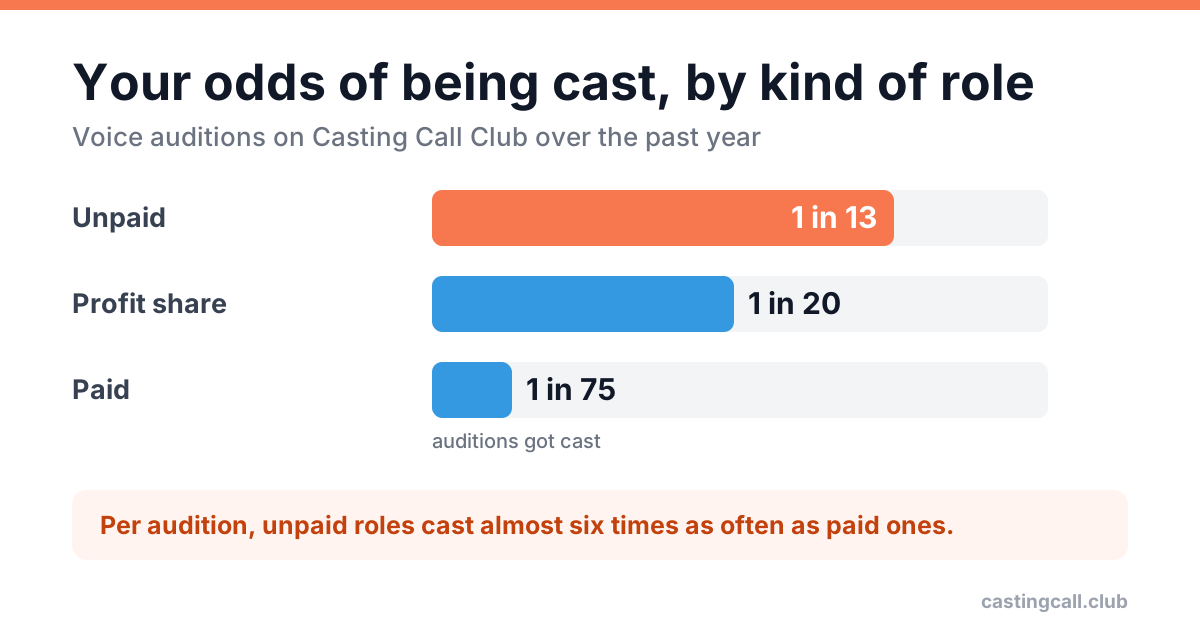
| Kind of role | Auditions that got cast |
|---|---|
| Unpaid | About 1 in 13 |
| Profit share | About 1 in 20 |
| Paid | About 1 in 75 |
Per audition, you're almost six times more likely to be cast in an unpaid role than a paid one. For someone with no credits yet, that's the whole argument: unpaid roles are where you actually get to do the work.
What unpaid work gets you
- Credits. Finished projects on your profile make directors of paid projects take you seriously.
- Demo material. Real lines in a real scene beat anything you record alone.
- Practice taking direction. Retakes, notes and deadlines are the actual job.
- People. The animator making a fan dub today is making a paid game in three years, and they cast who they know.
Pick projects that will finish
Here's the catch: about 6 in 10 voice roles posted never get anyone cast. Projects fizzle. An unpaid role only pays off if the project comes out, so look for signs it will:
- Character art or a finished animatic, not just an idea.
- A YouTube channel or past projects you can watch.
- A clear release date and a reasonable number of roles.
- A director who replies to comments and casts people on their other projects.
When to say no
- It's commercial. If someone is selling the game, running ads, or getting paid by a client, you should be paid too. Check the indie rates for what to ask.
- They ask you for money. Never pay to audition or to join a project.
- They want to train AI. Projects built to collect voices for AI aren't allowed on Casting Call Club. Anywhere else, make sure your contract says your voice can't be used that way.
- It eats your week. A few lines for a credit is fine. Forty hours of narration for free isn't.
When to move to paid work
There's no magic number, but once you've got a handful of finished credits and a demo you're proud of, start auditioning for paid roles alongside unpaid ones. Directors of paid projects look at your profile, and finished work is what they want to see. Paid voice acting jobs are all in one place.