The best microphone for voice acting
By Buford Taylor, who runs Casting Call Club. Updated October 2026.
The best microphone for voice acting is the one that fits your room and your budget. A great mic in an echoey bedroom sounds worse than a cheap one in a closet full of clothes. Here's how to choose, plus what the voice actors on Casting Call Club actually list on their profiles.
What Casting Call Club voice actors use
Members can list their gear on their profile. These are the microphones that come up most:
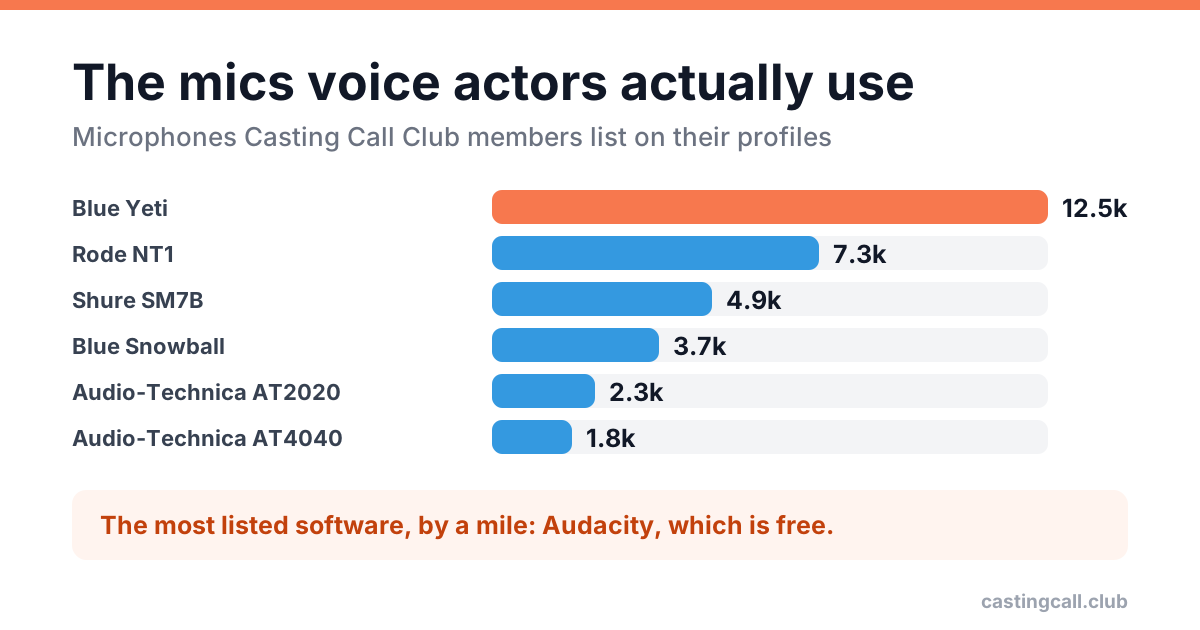
- Blue Yeti
- Rode NT1
- Shure SM7B
- Blue Snowball
- Audio-Technica AT2020
- Audio-Technica AT4040
- Neumann TLM 103
- Sennheiser MKH 416
- HyperX QuadCast
- Shure SM58 and Shure MV7
The most listed audio interfaces are the Focusrite Scarlett Solo and 2i2, and the Audient iD4. The most listed software, by a mile, is Audacity, which is free.
USB or XLR?
- USB mics plug straight into your computer. They're the cheapest and simplest way to start. The Blue Yeti, Snowball and HyperX QuadCast are USB.
- XLR mics need an audio interface (a small box like a Scarlett Solo) between the mic and the computer. They cost more up front, but you get better sound and room to upgrade.
- Both. Some mics, like the Shure MV7 and a few budget dynamic mics, have both plugs. That's nice if you want to start on USB and move to an interface later.
Condenser or dynamic?
Condenser mics (Rode NT1, AT2020, AT4040, Neumann TLM 103, Blue Yeti) are sensitive and detailed. They're great in a quiet, treated space and unforgiving in an untreated one, because they hear the whole room.
Dynamic mics (Shure SM7B, SM58, MV7) pick up mostly what's right in front of them. They do better in a noisy house or a room with echo. The SM7B is quiet, so it usually wants a strong interface or a booster like a Cloudlifter.
Shotgun mics like the Sennheiser MKH 416 are a long-time favorite in professional voice over booths. They're pricey, and they're best once your room is already sorted.
What to buy at each budget
| Budget | What makes sense |
|---|---|
| Just starting | A budget USB mic, or a USB-and-XLR dynamic mic. Your phone in a closet beats a laptop mic, too. |
| Getting serious | An XLR condenser like the AT2020 or Rode NT1 with a Scarlett Solo or Audient iD4, if your room is quiet. A dynamic mic if it isn't. |
| Going pro | Treat the room first, then a mic like the Shure SM7B, Neumann TLM 103 or Sennheiser MKH 416. |
Prices change all the time, so check current prices before you buy, and buy from somewhere with an easy return policy.
Fix the room before the mic
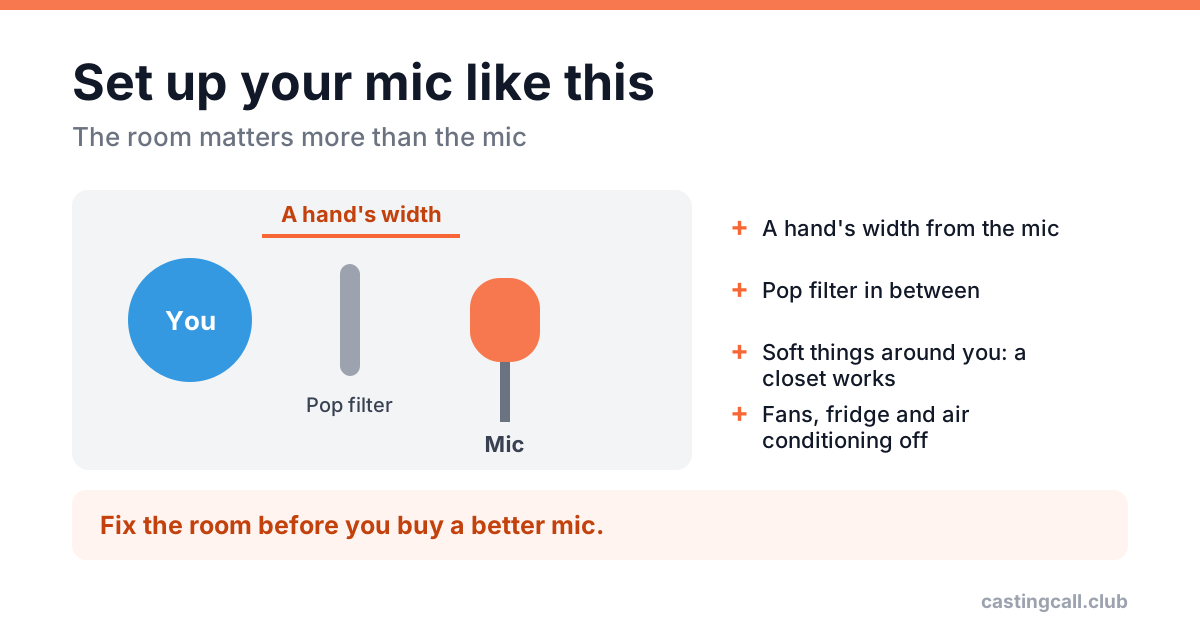
- Soft stuff kills echo. Closets, blankets, pillows and a mattress against the wall all help. Hard walls and bare floors are the enemy.
- Get close. Stay about a hand's width from the mic. Closer means more of you and less of the room.
- Use a pop filter. It stops the thumps on P and B sounds. A cheap one works fine.
- Turn things off. Fans, fridges and air conditioning show up in recordings more than you'd expect.
Got your setup? Here's how to become a voice actor from here, or jump straight into open voice acting roles.