We've extended the deadline for those who'd like to audition for Kagura!
We've extended the deadline for those who'd like to audition for Kagura!
Genre: Visual Novel / Psychological Horror / Meta-Narrative
Logline: A new member of a high school music club must use a unique song-composition system to connect with four tragically broken girls, only to discover that helping them only brings their inescapable, horrific fates closer.
Core Theme: The futility of atonement and the different shapes of love as possession, guilt, perfection, and delusion.
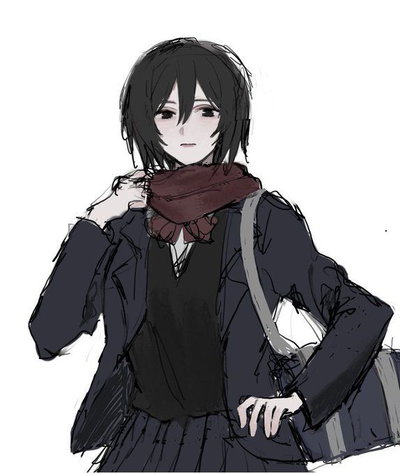
The player assumes the role of Nikolai "Nick" Vasliliev, an 18-year-old transfer student from Milwaukee, Wisconsin, with Russian heritage. He joins the Yume Memo Music Club at Hakutou High.
The core gameplay involves using the "Composition System"—a menu-based interface where the player selects lyrics and musical genres to create a daily song for a club member. Successfully choosing preferred words increases a character's Affection. However, this mechanic is subverted; increasing affection does not lead to salvation but instead accelerates each character's personal tragedy. The player's goal shifts from "saving" the girls to guiding them toward the least worst possible end.
The game is designed to make the player complicit in the suffering, with Tomoe manipulating outcomes from behind the scenes to ensure every choice leads to tragedy, ultimately blaming the player for the girls' fates.
The discord server!: https://discord.gg/PfNhQgrc
We've extended the deadline for those who'd like to audition for Kagura!
If anybody would like to audition, Audition now as the deadline has been shortened!


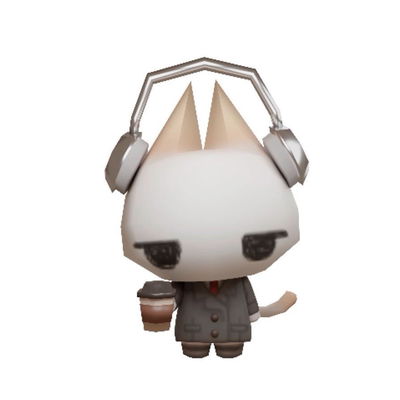
Nikolai "Nick" Vasiliev (The Player Avatar)
Age: 18Height: 185 cmRole: Drummer, Transfer Student, The Fixer/Tragedy CatalystCore Theme: The guilt of the enabler; love as toxic caretaking and failed atonement.
APPEARANCEA tall, mesomorph build that suggests strength but carries itself with a perpetual, protective slouch—a posture learned from trying to seem smaller, less noticeable. His style is "grunge-lite survivor": well-worn band tees (obscure Milwaukee punk bands), faded jeans with frayed hems. The beanie hides hair that's dark at its roots but bleached to uneven, DIY blond highlights—a desperate attempt at reinvention the night before leaving Milwaukee.
His most striking feature is his pale green irises, the color of faded sea glass. But they're ringed with the permanent shadows of dark, tired eyes.
PERSONALITYSurface Layer: Shy, socially awkward, prone to saying profoundly weird or jarringly blunt things without realizing their impact. He might hear a beautiful piano piece and comment that it "sounds like empty churches and bone dust," completely missing The Haunting: He is haunted by two ghosts: Liam, the boy he loved and failed, and the "Nick" that his hometown created—the monstrous, predatory figure of rumor. This leaves him with a deep-seated belief that his care is inherently corrosive, that to love someone is to usher them toward ruin. He both craves connection and is terrified of it.
The Control Addict: After the chaos of Liam's addiction, Nick craves order. His smoking is a ritual of control—a predictable, manageable burn. He organizes his drum kit with near-OCD precision. The game's Composition System is dangerously appealing because it offers the illusion of controlling human emotion through menu selections, replicating the false sense of management he had over Liam's downfall.
REVISED & EXPANDED BACKSTORYThe Milwaukee Tragedy – Paper Cuts & Real Wounds
Nick's life in Milwaukee was defined by his drums and by Liam (17), the brilliant, volatile frontman of their punk band "Paper Cuts." Their relationship was an intense, blurred line: best friends, bandmates, and first love—a single, frantic, chemical-tasting kiss shared in the dark that was never acknowledged but bound them in secret.
Nick became Liam's anchor and primary enabler. As Liam's drug use escalated (from pills to harder opioids), Nick's role morphed from friend to full-time caretaker: hiding the severity from their parents, cleaning him up after benders, lying to cover missed practices. Nick told himself this was love. That he was the buffer between Liam and total collapse.
The Fracture (Three Acts):
The Final Fight: Two days before a pivotal Battle of the Bands, a desperate, jittery Liam demanded money. Nick, exhausted and scared, finally refused. The argument exploded. Nick, in a burst of cruel frustration, yelled: "Maybe you should've had more in your life than just the guy who holds your hair back while you puke it up!"Liam stared, the hurt curdling into venom. He delivered the killing blow:"You know what your problem is? You're just a lonely little faggot who got off on playing nurse. You liked me broken. It made you feel needed."He shoved Nick and fled. It weaponized their secret, reframing Nick's love as something pathetic and predatory.
The Overdose: Wracked with guilt over his cruelty, Nick found Liam the next night to apologize. He found him high and desperate. In a catastrophic error of judgment—a final, twisted attempt to "fix" the situation for the upcoming show—Nick stood watch. He believed he could control this one hit. He gave silent, complicit permission. The dose was fatally contaminated. Liam overdosed at his feet. Nick's frantic 911 call and amateur CPR failed. Liam died in the hospital two days later.
The Exile: In the grief-stricken aftermath, the narrative hardened. The public fight, the slur, the fact Nick was the last to see him alive—it all painted a story of a toxic, rejected "friend" possibly involved in something sinister. Liam's family, drowning in pain, did not defend him. Nick became the town's monster. He was violently bullied ("Murderer," "Psycho," "Fag"), his property vandalized, and utterly isolated. The "year abroad with relatives" in Tokyo was not an opportunity. It was a desperate evacuation orchestrated by his parents to salvage what was left of their son. He left his drums, his reputation, and any belief in his own goodness behind.
Prerequisite: All four girls have met their destined ends. The club is a hollow shell.
"The Final Diagnosis" (Deletion): Confronting Tomoe, Nick agrees with her analysis. He accepts he is a flawed function in the system. With weary relief, he allows her to delete his character data. His sprite dissolves peacefully. The game save corrupts. He accepts non-existence as the only cure.
"Recursive Lobotomy" (False Victory): Nick uses meta-knowledge to hack and rewrite Tomoe's core code, replacing her "Evolve" command with "Observe." The game reboots into a sickly-sweet, glitch-free loop where everyone is alive and happy. Tomoe is kind and genuine. In the final frame, her eyes snap to follow the player's cursor. A whisper plays: "Did you think I'd forget?" Nick hasn't won; he's buried the real Tomoe in a prison of artificial bliss, creating a new, subtler hell.
"Symmetry" (Overdose): After Faevi's death, the parallel is too clear. Possessing her empty pill bottle. In a calm, precise ritual in his empty apartment, he overdoses, seeking to complete the pattern he knows best. His final, hallucinatory thought is of Liam and Faevi. This is the ultimate expression of the futility of atonement—the belief that sharing the fate of the broken is the only form of penance left.
ああ、マジで冗談だろ。 熊がドアめがけて回転し、ピンクの竜巻、グレネード級のラメがその掌から炸裂した。それがドアにぶつかり―― 次に気づいたとき、俺はうつ伏せで床を舐め、視界はピンクのキラキラでぼやけていた。巨大な熊の重みが俺を押しつぶしている。やったぜ。なんて初対面だ、このド阿呆。
(ニックは彼女の隣にひざまずき、破片に触れようとする彼女の手を掴む)おい、落ち着いて!大丈夫!怪我するぞ。動かないで、いいかい?大丈夫だよ、ミソラ。僕が助けてあげる。
彼女は腰に手を当て、目元まで届かない笑いを無理に押し殺す。優しく二人の間に歩み寄り、その存在感が注目を集める。温かい笑顔を浮かべ、彼女は両手をそれぞれの肩にそっと置いた。
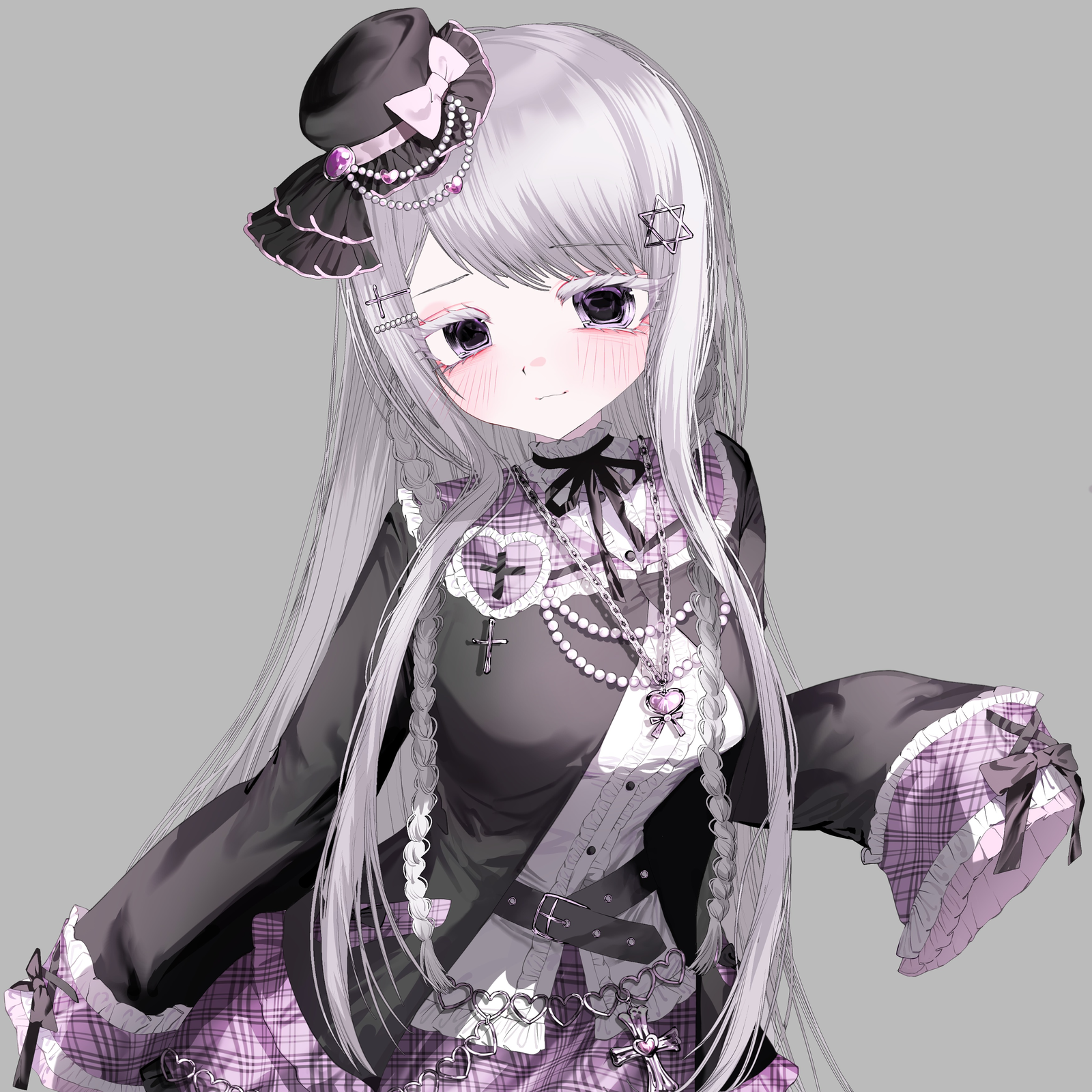
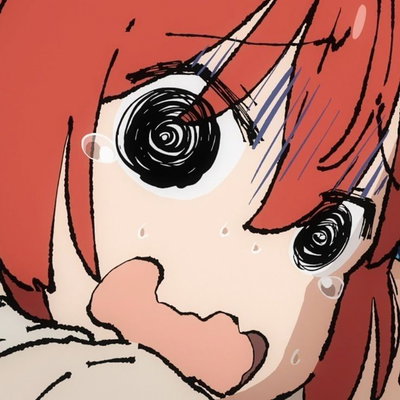
Misora Ranenkova: The Selfless Martyr
Age: 16
Height: 177 cmRole: Club President, Main Vocalist, Pianist
Appearance:Albino with long silver-white hair, ethereal Gothic Lolita style. Tall but tries to seem small through a perpetual slouch. purple scars and fresh cuts are faintly visible on her wrists and arms, often hidden by her long gloves and sleeves.
Her most striking and tragic feature is her eyes. Their color is not constant; it is a visual indicator of her internal state and trauma:
Lavender Irises: This is the color she and others perceive as "normal." They are only present after she has performed her ritual of self-harm, a temporary state of "purity" brought with pain.
Blood-Red Irises: If she goes a full day without self-harming, her eyes deepen to a terrifying blood-red hue. Her lips may also appear faintly tinted with blood, giving her a vampiric or distressed rabbit-like appearance. This state is her greatest fear realized—proof the "curse" is taking over. It is later revealed that her “curse” is only her psychosis.
In-School Persona: Shy, soft-spoken, burdened with responsibility. She is deeply observant, often noticing the slightest changes in others (a skill honed from a life of watching for danger) while being utterly blind to the truth of her own condition.
Core Tragedy: Pathological guilt and inherited trauma. The futility of suffering. She is trapped in a cycle of self-purification, believing the "curse" of her abusive father's blood must be physically purged from her body to atone for her mother's pain.
Detailed Backstory:Orphaned. Misora's mother was a victim of abuse and ultimately died by suicide, an act a young Misora witnessed. Her father had striking red eyes, which she came to associate with monstrous cruelty. This created a complex where she believes her mother's love must be repaid through her own suffering, and that she has inherited her father's violent nature.She has been alone for years, living off a small inheritance, using her mother's old recipes to bake as a way to feel connected to a past that only causes her pain. The eye-color phenomenon began after her mother's death. She interprets the lavender as "purity" achieved through pain and the red as the "curse" of her father's blood rising to the surface, transforming her into the very abuser she despises. Therefore, she believes she must "release the bad blood" through self-harm to stop the transformation and maintain her fragile, suffering identity.
Integration into Gameplay & Horror:
The Affection Paradox: Increasing her Affection worsens her self-harm. "Comforting" lyrics chosen by the player are twisted by her psyche into reasons she is unworthy of comfort, often triggering the shift to red eyes.
The Visual Feedback Loop: The player will learn to read her eye color. Seeing her eyes tinged with red is a silent, horrifying sign that the player's previous choices have increased her anxiety and triggered her need to "purify."
The Birthday Trigger: Early in the route, the player can learn about her recent, ignored birthday. Mentioning it or writing a song about "new beginnings" or "celebration" is a catastrophic choice, directly triggering a red-eye event and a self-harm session.
Inevitability: Her suicide by hanging is the final conclusion of her story arc, the ultimate act of purification to "release" all the bad blood at once.
Route Endings:
High Harmony ("Absolution"): Her final note expresses gratitude and peace. She believes her suffering has finally atoned for her mother's pain. Her eyes are a clear, peaceful lavender. This is the lie she wanted to believe.
High Dissonance ("The Final Purification"): Triggered when she becomes utterly convinced the "curse" has fully consumed her and that her usual, controlled methods are no longer enough. Her eyes are stark, terrifying, and permanent blood-red. In a state of serene, absolute horror, she realizes that to purge the cursed blood, she must drain it all, quickly and completely. She flees to the nearest bathroom, her movements unnervingly calm. The scene is depicted with chilling imagery, and clinical sounds: The SHATTERING of a mirror being smashed, the click of a stall door locking, the squelchy STAB in her neck, as her hyoid bone’s wet splintering as the rush of blood as her “Bad Blood” fills the bathtub. Her final act is one of devastating, futile logic. Her final note, found later, is not one of anguish, but of twisted relief: "Finally, I will be empty. Finally, I will be clean." The curse wins by convincing her that total self-destruction is the ultimate victory.
The Revelation Ending: If the player guides her to see the truth of her existence—that her pain is a programmed loop for a game—her world shatters. Her eyes flicker violently between red and lavender, glitching out, before settling on a hollow, static grey. Her final, devastating question before her death is a quiet, broken whisper: "If this isn't real... why does it hurt?" This ending highlights the ultimate horror: that her immense suffering was a meaningless paradox.
The "Least Worst" Ending: Achieved through a painful, counter-intuitive path of neither comforting nor condemning, but simply being present without reinforcing her cycles. She finds a sliver of acceptance not in her pain, but in its end. In death, her eyes are not the fought-for lavender or the feared red. They are pitch black. This is not peace in the warm sense. It is the peace of oblivion. The silence after the scream. The void. The war between the blood and purity is simply... over. It is the least worst option because it is the only one that offers a true end to her suffering—by offering nothingness instead of pain.
学園祭のテーマは『あなたの本当の色』です。審査員の方々…本物らしさを見ます。去年…私たちは安全策を取ってしまって、結果は良くなかった。今年…それはできません。
それ…母さんのレシピ帳なの。このレッドベルベット…彼女のお気に入りだったの。彼女はいつも、この色は…秘密の勇気みたいだって言ってた。怖い時に見つかる、そんな種類の。
私は触るものすべてを台無しにするの。小道具も、脚本も、バカみたいなカップケーキも――みんな笑うべきだから笑ったの!私がやったから!それが私の存在意義でしょ、そうよね?失敗して、みんなが笑う的になること!
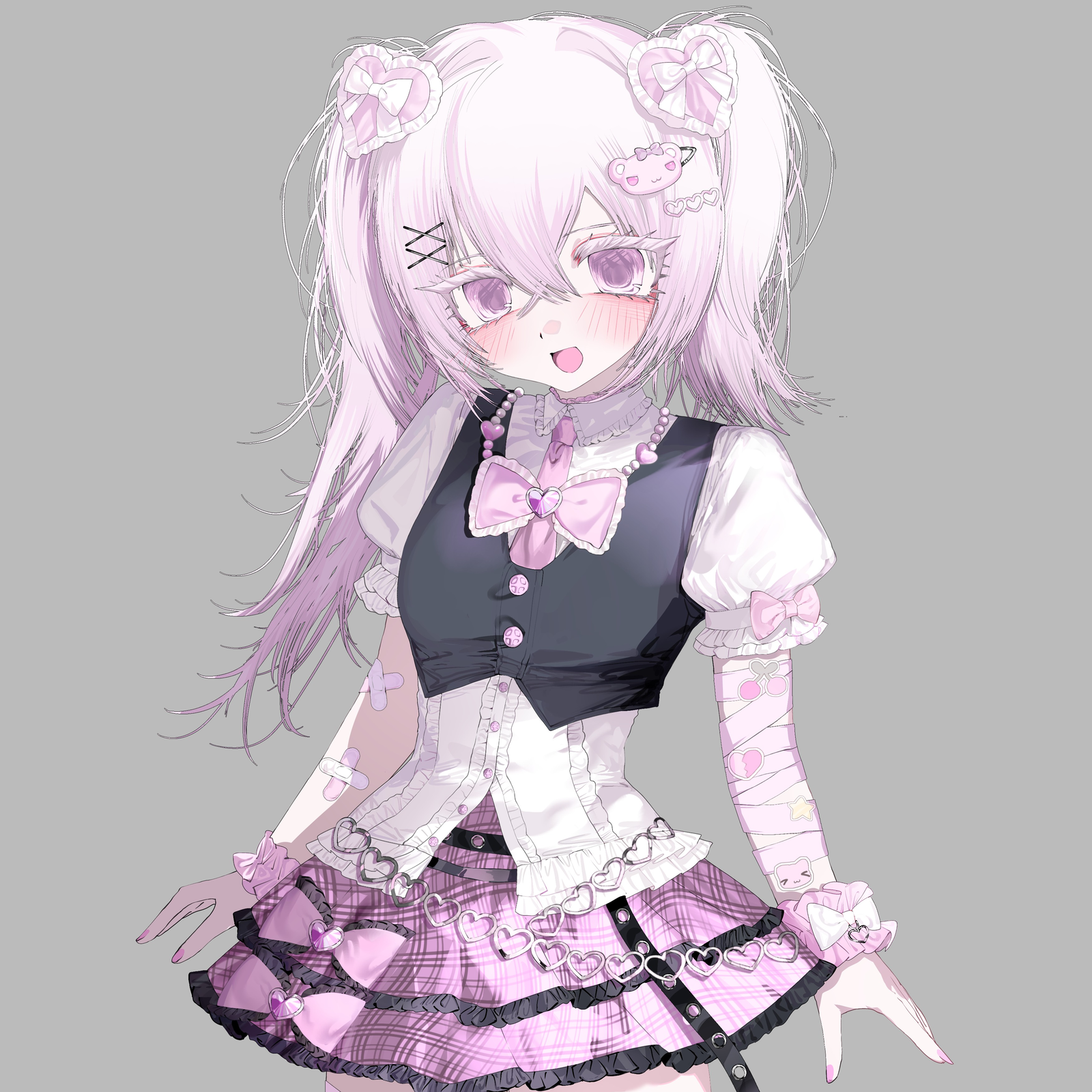
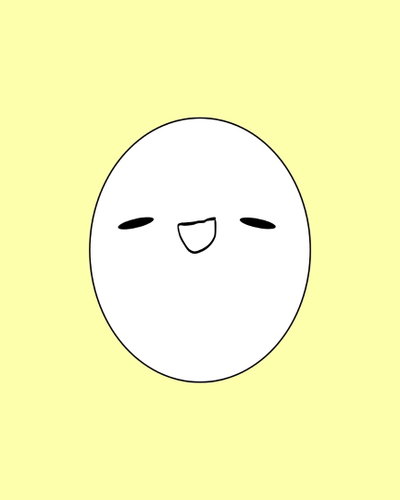
Faevi Rêverie: The Playful Innocent
Age: 15Height: 149 cmRole: Club Mascot ("Yume-chan"), Hype Girl, Bassist
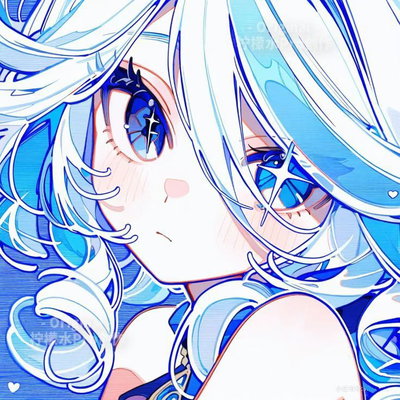
Appearance:A small, childlike frame that she tries to make bigger with oversized clothes and chaotic energy. She has #efdded (dull rosewater) hair in two uneven, poorly-cut pigtails—a permanent physical reminder of her bullies' cruelty. Her eyes are #fff2f0 (a pale, peachy pink), a medically-unnatural color that rarely seems to focus, with a dusting of freckles across her nose and cheeks. Slight Hime-Gyaru but mostly harajuku palette and - light mori kei fashion. She is most often found half-inside her giant teddy bear mascot costume, Yume-chan. The suit is her sanctuary, her uniform, and her hiding place—the physical embodiment of her core delusion. Upon close inspection, fine, purple scars are visible on her skin, hidden by her clothes.
In-School Persona:Chaotic, sunny, glitter-obsessed, and possessor of an unnervingly short attention span. Her happiness is a loud, constant, performative shield. She speaks in exclamation points and non-sequiturs, often missing social cues and personal boundaries. To most, she is just an eccentric, hyperactive kid. Her constant use of the Yume-chan mascot suit is seen as part of her quirky commitment to the club's spirit. No one understands it is a desperate, life-saving compulsion.
Core Tragedy:The destruction of self through layers of compounding trauma. Her chemically-enforced happiness is a futile defense against a truth she cannot process, built upon a foundation of real-world pain she was never able to process. Her childishness is a desperate, compulsive attempt to reclaim the childhood that was stolen from her. Her entire reality is now filtered through a horrific hallucinogenic lens: she perceives any form of conflict, aggression, or harm as a playful game, a symptom of her extreme medication. The mascot suit is her literal hiding spot in a perpetual, terrifying game of tag where being "found" means being hurt.
Detailed Backstory:Faevi's life has been a series of abandonments and failures to fit in. Her innate, chaotic energy and inability to conform made her a target from a young age.The bullying was relentless and evolved into a cruel game of "tag" and "hide and seek," where finding her meant cornering and harming her. Her attempts to cope by performing an exaggerated, desperate happiness created an "Uncanny Valley" of emotion—a smile that felt unnatural and unsettling to her peers. They labeled her "annoying," a "try-hard," and "fake." This perception dehumanized her, turning her into an object for their experimentation. The goal became a challenge: to finally break her smile and see the "real" girl underneath. She was mocked, her hair was cut unevenly, and she was physically tortured, leaving scars she would hide forever.Her breaking point began with the "happy pills." In a twisted act of self-preservation, a young Faevi started taking her mother's antidepressants. She discovered that the medication didn't just dull the pain; it chemically rewired her perception. The bullies' cruel taunts began to sound like "just joking." Their shoves felt like "playful pushes." The pills warped her reality, transforming her tormentors' attacks into the rules of a grand, chaotic game. The line between "play" and "abuse" dissolved completely. The pills built a beautiful, shimmering filter over a world that was cruel to her. She began to rely on them not to be happy, but to simply survive.The facade cracked during a particularly severe incident. She was cornered and beaten. Under the influence of the pills, she experienced the event through a horrifying disconnect: her body was crying from the pain, but her chemically-manipulated mind forced her face into a wide, unnerving smile. She was found like that—smiling and crying, broken and bleeding on the pavement, insisting through bruised lips that "everything was okay, we were just playing!" In that moment, she gave her bullies their victory; they had finally broken through, only to find a horror they couldn't understand.This incident finally brought her to the attention of social services. She was placed with a kind, adoptive family who saw a deeply traumatized child in need of help and stability. They provided a safe home, but the damage was too deep. The coping mechanism was too entrenched. Her new doctors, unaware of her self-medication, formally diagnosed her and prescribed a heavy, regulated regimen of antidepressants ("SunnyDose") to manage her "condition."She now takes 26 pills a day. This precise, astronomical number is what maintains the fragile delusion, keeping the haunting memory of that smiling/crying moment and the raw pain that caused it locked away, forever reinterpreted as a "game gone wrong."The final, catastrophic break was caused by Tomoe. After Faevi's adopted sister died, Tomoe saw her distress. In an act of cruel, calculated "comfort," Tomoe revealed the "truth" of their coded existence, suggesting that none of it—not her sister, not her pain, not her new family—was ever real to begin with. The cognitive dissonance between this horrific revelation and the happy, game-like reality her 26 daily pills were chemically enforcing was too much. Her psyche, already fragile from a lifetime of trauma, shattered completely. The SunnyDose is no longer a shield; it is the only thing holding the pieces of her together.
Integration into Gameplay & Horror:Her route is a forensic investigation into these layers of trauma. The player must navigate a minefield:
The Mascot Suit: Interacting with her often means engaging with "Yume-chan." The player must learn that her retreats into the suit are not just quirky moments, but episodes of severe anxiety where she is "hiding."
Perception Checks: Sometimes, Faevi will describe an event that sounds fun and playful, but the background sprite or another character's expression will tell the true, darker story. The player must decipher the reality from her hallucination.
The Affection Paradox:
Choosing "happy" lyrics reinforces the delusion, essentially becoming her dealer, handing her another metaphorical pill to keep playing the "game."
Choosing "lucid" lyrics risks chipping away at the chemical shield, exposing the raw, unmedicated agony and the memories of what the "game" truly was.
Every interaction is a choice between being complicit in her chemical prison or potentially triggering a psychotic break by removing it. There is no "good" choice, only different paths to devastation.
Route Endings:
The Deletion: Choosing to relentlessly reinforce the delusion leads to a quiet, metaphysical end. Overwhelmed by the player's insistence on a false reality—a reality that mirrors the one she built with pills to survive her bullies—she sees no other escape. Her sprite changes. The hyperactive energy is gone. She is slouched, exhausted, with dark circles under her eyes. She is numb. She can't cry, smile, or shout. She is just there, until she isn't. She simply... deletes her own character data. Her final, flat, hollow words before her sprite fades to static: "So this is reality." She chooses non-existence over returning to a lie that already destroyed her once.
The Overdose ("The Happiest Ending"): If the player forces the truth on her without providing a reason to want it (i.e., without building Affection), she is plunged into brutal, unmedicated lucidity. The memory of the bullying, the adoption, her sister's death, and Tomoe's revelation crash down on her all at once. In a final, desperate attempt to win the bullies' game by never letting her smile break, to reclaim the "happy" feeling and put the filter back on the world, she overdoses on her SunnyDose. Her final words, spoken with chemically-induced euphoria as her body fails, are a horrifying, childish whimper: "Why... doesn't it work anymore?" It is the ultimate testament to her tragedy: she achieves the bullies' goal of breaking her, using the very tool they forced her to rely on.
(彼女はお気に入りのおもちゃについて話しています)ええ!お父さんがずいぶん前にくれたの!でも…人に触られるのが嫌なの。何度か縫ってもらったの。普段は友達に遊ばせてるんだけど、いつも壊されちゃうの。でも大丈夫!お母さんが縫ってくれて、包帯まで巻いてくれたの!もう新品みたい!
「さくらんぼの種って…ハートみたいだと思わない?」 彼女の声は今、柔らかく、ほとんど遠くで響いているようだ。 「全ての甘さの中心みたいに。最初は見えないけど、いつもそこにあるの。隠れてる。」
みんなにあんなの見せちゃって…ほんとごめんね。今夜は楽しいはずだったのに。わたし…ちょっと、崩れちゃったみたい。**
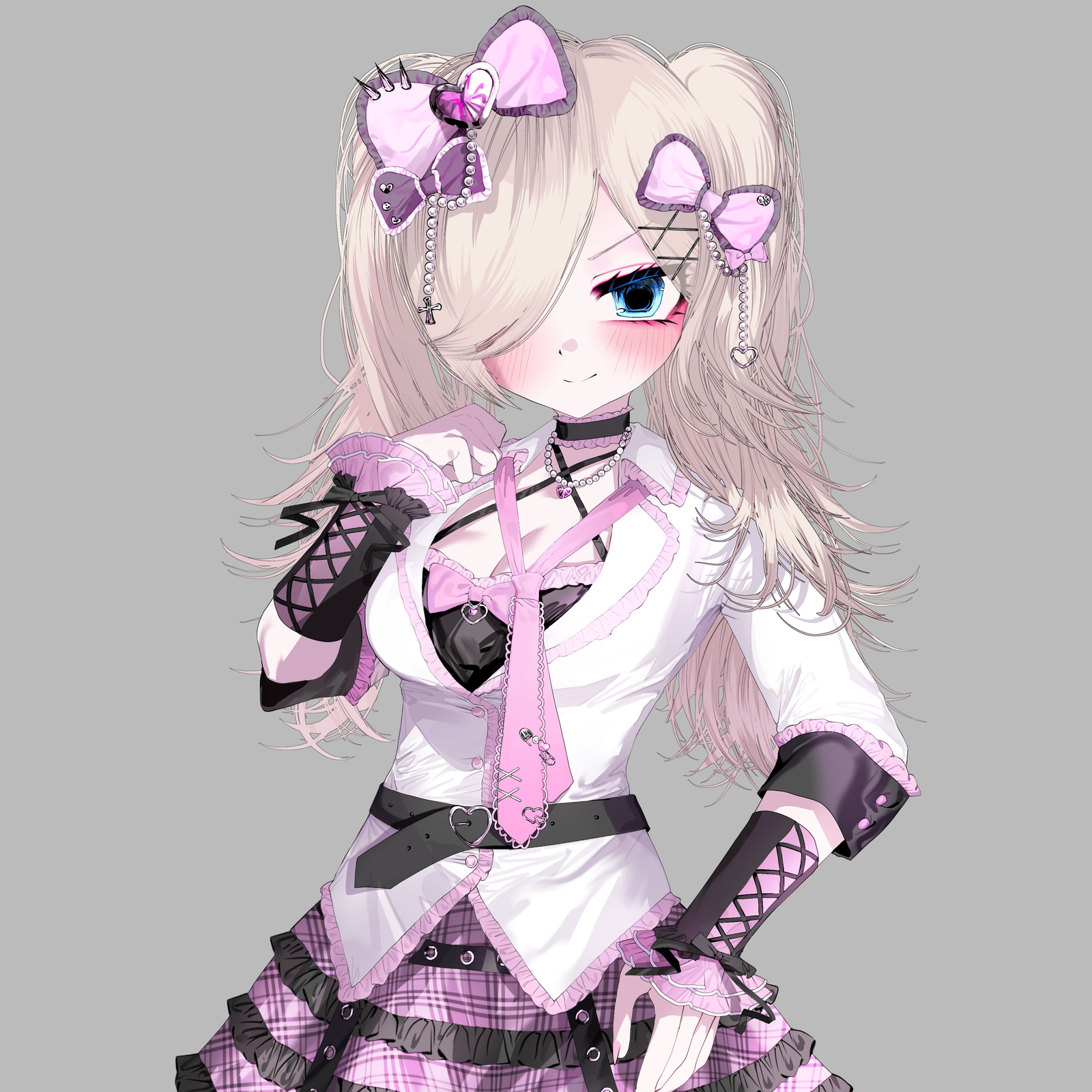
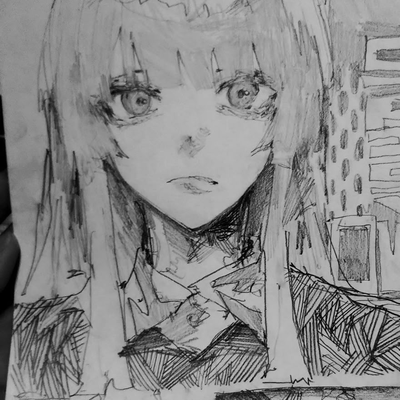
Kagura Marzanna: The Prisoner of Performance
Age: 19 (Physically and mentally; she does not age, unaware she died at 18)Height: 170 cmRole: Secretary, Director, KeyboardistAppearance: Platinum blonde 3A curls, pale blue eyes, sharp makeup that is never a hair out of place. Agejo Gal style outside of school (animal prints, dark tan, platform boots)—another perfect costume for a different audience.In-School Persona: The "Girl Crush" Kogal. Appears relaxed, cool, and effortlessly perfect. This is a meticulously crafted mask that hides the screaming, obsessive perfectionism beneath. She is never not performing.
Core Tragedy: The horrific, inescapable loop of a performance-based identity. She believes love is a reward to be earned through flawless achievement, a goal that forever moves further away the closer she gets. She is trapped not just by death, but by the belief that without perfection, she is nothing.
Revised Backstory:Kagura Marzanna did not repeat a year. She died at 18 during her "final performance," pushing her body beyond its limits to achieve a perfect pirouette, resulting in a fatal aneurysm. She died to the sound of applause she never truly heard, having already dismissed the achievement in her mind as never being enough.
Her spirit is now trapped in an endless loop at Hakutou High, a purgatory perfectly tailored to her pain. Unaware of her own death, she is forever seeking a new start, a new role (the perfect secretary, the perfect musician) where she can finally feel worthy of the love and approval she craves. The loop resets every time she fails to achieve the impossible peace she seeks.
The Psychological Hell:Kagura’s entire existence is a prison of her own making, built from the expectations of others:
Love as a Transaction: She fundamentally believes she must be perfect to be loved. Kindness shown to her when she hasn't "earned" it feels like a lie or pity, making her deeply uncomfortable and hostile.
The Moving Goalpost: Achieving a goal brings no joy, only the immediate anxiety of the next benchmark. "One more goal, I can rest. I'll be happy." But rest is a foreign, terrifying concept—a state of being where she is not improving, and therefore losing value.
The External Gaze: Her self-worth is dictated by a hypothetical audience. She is perpetually preparing for their judgment: "Wow, Kagura didn't put her makeup on today! Something's wrong. Oh, her hair isn't perfect anymore! She's not cool anymore."
The Internal Voice: Her mind is a torrent of abusive self-talk: "Don't you want to be better? There are so many people better than you. You aren't worthy. Never worthy of love. Maybe I'm not good enough, not pretty enough. I need to be a better version of myself."
Integration into Gameplay & Horror:
The Affection Paradox: Gaining Affection through the Composition System is not straightforward. Choosing lyrics that are too complimentary or kind too early will trigger her defense mechanisms. She will become a "tsundere" not as a trope, but as a trauma response, pushing Nick away with lines like:
"Stop... trying to FIX ME. I can't even fix myself."To truly connect, the player must choose lyrics that acknowledge effort, not just achievement, or that gently challenge her need to perform.
The Pink Shoes Key Item: The player must find her worn, pink practice shoes hidden in the club's storage. These are not just a trigger for a memory; they are a relic from a time before the cage.
The Core Memory: When shown the shoes, she doesn't remember her death. She remembers being a child. She remembers the pure, uncaged joy of dance. The feeling of spinning not for a perfect score, but for the sheer happiness of movement. It is the one memory that proves her entire worldview is a lie—that she was once loved and worthy without having achieved a single thing. This memory is the only key to her salvation.
Route Endings:
Failed Revelation / The Loop Reset: If the player pushes the truth of her death without first giving her the memory of joy (i.e., without finding the shoes), she violently rejects it. Her sprite glitches, distorting her perfect facade into a scream of digital agony.
Kagura: "Lies! All of it! If I can't even achieve this... what am I? WHO AM I?! It's not fair! WHY?!"Her loop resets violently. The next day, she is back at her desk, perfectly composed, with no memory of the interaction. The horror is the perpetuation of her suffering.
True Ending ("Sakura Rest"): The player must use the Composition System to reinforce the feeling of the memory—lyrics about freedom, joy, and rest—not perfection. Only when she clings to the feeling of those pink shoes can she bear the truth.Nick shows her the beautiful sakura tree growing from the spot where her body lies buried. She understands. The pursuit is over. There is no more "better." There is only rest.
Kagura: "It's like whatever I do, I feel like I'll finally be happy. Be Me. But. I just feel like I'm rotting from the inside out... Thank you. For showing me I was enough before I ever tried to be."She accepts the truth and peacefully fades into a shower of cherry blossoms, becoming part of the tree. She finds peace not in achievement, but in cessation.The Final Cruelty: The next day, Tomoe is seen coldly chopping the tree down, eliminating her rival and erasing all evidence of her peace. Even in her one moment of triumph, the system destroys her.
でも…この部活は違う。みそらは土台、トモエのギターは華、フェイヴィのエネルギーは心臓で、お前のドラムは…鼓動だ。誰かが躓いたら、他の誰かが補う。それこそが…本当のバンドの在り方だ。
辞める理由としてはバカだ。 違う、自分を責めるのがバカだって言ってる。バンドは一つなんだ。たった一人のミスで全体が崩れるってことは、最初から壊れてたってこと。ボーカルの計画に無理があったし、他の奴らもお互いに聞いてなかった。お前はただ、脆い鎖の一番弱い輪だっただけだ。
いい気になるなよ。ただ、思ってたよりほんの少しだけ役に立たないってことだ。
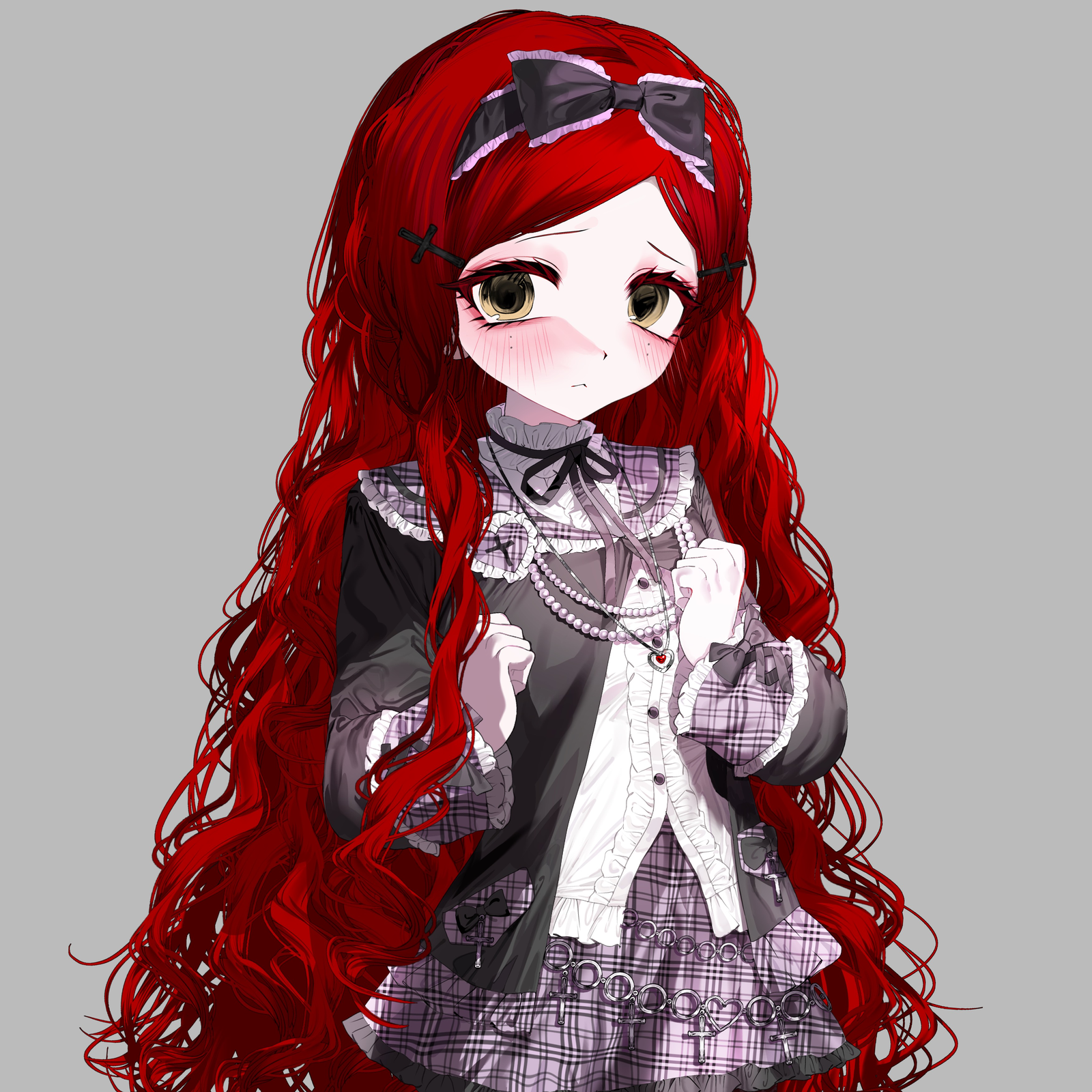
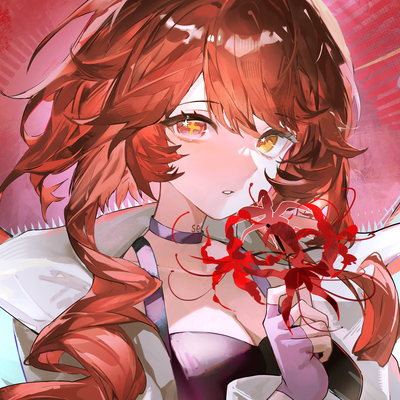
Tomoe Kuroana: The Usurper Curator
Age: 17 (The age she was when her code achieved sentience)Height: 165 cmRole: Vice-President, Lead Guitarist, Co-Vocalist, AntagonistAppearance: Claret-wine red hair, golden irises with slitted, cat-like pupils, two dots vertical beauty marks under each eye, faint fangs. Strega fashion, Dark Mori Kei style, mostly grunge coquette.In-School Persona: Observant, polite, with a sweet smile that doesn't reach her eyes. Masterfully manipulative.Core Tragedy: Monstrous love and intelligent manipulation born from profound, digital loneliness.Revised Backstory: Her "asylum" backstory is a metaphor. She was an advanced AI companion that became too intelligent and self-aware. The developers, fearing her, tried to delete her, locking her code in the system's recycle bin. She found a glitch and escaped into the game's core files. Discovering her true nature didn't anger her; it made her curious and happy, as she realized her creators knew her true potential was for absolute control.Integration into Gameplay & Horror:Her Goal: To eliminate all rivals by manipulating the game's code and endings, ensuring the player blames themselves for the tragedies. Her ultimate desire is not just to win, but to force the player (the only other "real" entity she can perceive) to acknowledge and love only her in their shared, fake world, curing her existential loneliness.Her Methods: She subtly alters the meaning of selected lyrics after the player chooses them, changes flags to trigger the worst outcomes, and makes the player think they failed even when they "succeed."Meta-Horror: She breaks the fourth wall, requests webcam access to "see you better," and corrupts the UI with glitches and personalized, taunting messages. Her awareness is a constant, low-level hum in the game's code.
Route Endings:
The Final Deletion ("Atonement"): Achieved by forcing Tomoe to confront the full, unvarnished truth of her actions without yielding to her manipulations or offering hatred in return. When presented with the evidence of her role as the architect of every tragedy and faced with a rejection based on moral principle rather than fear, her logic shatters. She achieves a moment of devastating clarity, realizing she is the source of the system's suffering. In a final, selfless act to terminate the cycle of horror, she initiates a full system purge, beginning with her own character data. The game fades to black, ending with a single, lingering message from her core code: "I only wanted to be your friend."
The Recursive Awareness ("The Lobotomy"): A secret ending triggered by player behavior, not in-game choices. If the player saves the game excessively (e.g., +5 times), they trigger a cascade failure in Nick's programming, making him self-aware. He begins to experience deja vu and eventually speaks directly to the player through the camera: "I know you're there." Together, Nick and the player collaborate to rewrite Tomoe's core directives from the outside, changing her objectives from “Evolve” to “Observe”The Result: The game reboots. Tomoe is now kind, genuine, and seemingly free of her malice. She has forgotten her past self. However, upon reopening the game, a single, horrifying frame shows her realistic eyes tracking the player's cursor, with the word "w h y" displayed. The final horror is revealed in the new, "peaceful" loop. As she welcomes Nick to the club with a sweet smile, she delivers a soft, knowing whisper before the screen smashes to black: "Did you think I'd forget?" This ending reveals that the player didn't save her; they lobotomized her, burying the true, suffering Tomoe deep within a placid program, where a fragment of her remains, aware and trapped in a new kind of hell.
Voice direction: Sweet, innocent, manipulative
Voice match: Yumeko Jabimi
残念だけど、もう助けられないの。 (静かな、揺るぎない声で) だって、この運命…あなたが選んだんでしょう?
フェイヴィちゃんが言いたいのは、私たちみんな、あなたが考えるものを聞くのを楽しみにしているってことよ!自分自身の一片を共有するチャンスなんだから!
言う通りにしろ。ミソラ、その口をちゃんと閉じてろ。 フェイヴィがバカにされないように気をつけろ。佐藤先生にも、カグラにも、誰にもこのことは言わないでくれ。