How to make an audio drama
By Buford Taylor, who runs Casting Call Club. Updated October 2026.
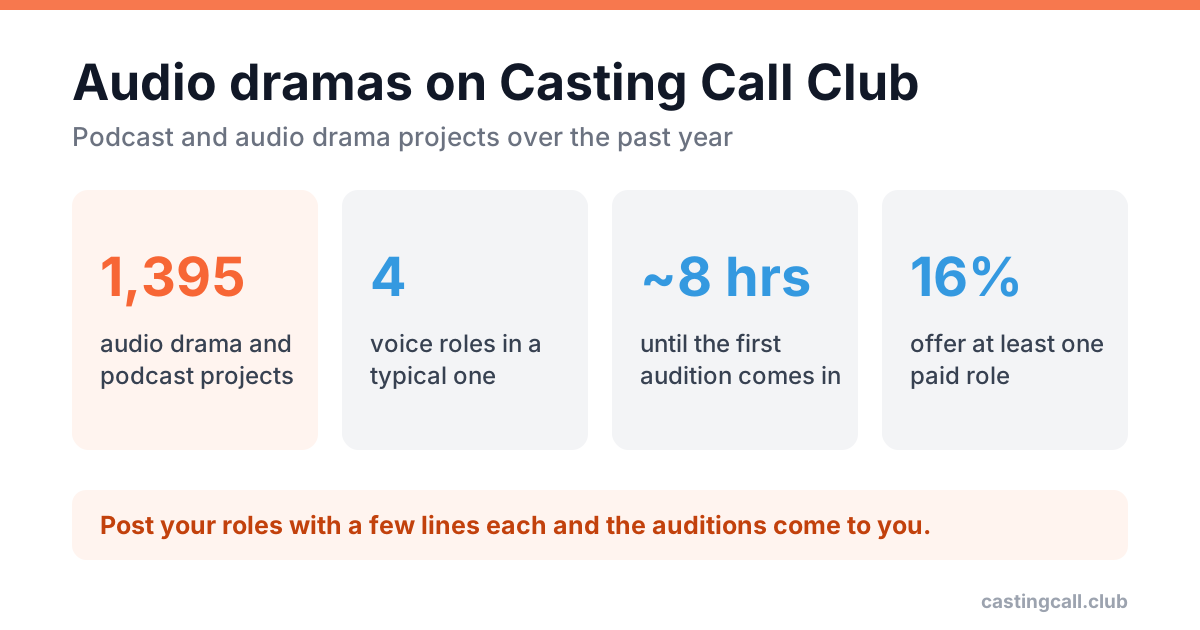
An audio drama is a movie with no picture: voices, sound and music telling the whole story. They're one of the easiest things to make with people all over the world, because everyone records at home. Over a thousand audio drama and fiction podcast projects a year cast their voices on Casting Call Club. Here's how to make one.
1. Write for the ear
- Keep the cast small. Three or four main voices are easy to tell apart. Ten in one scene is a mess.
- Say what the listener can't see. Characters name each other and react to things, so the listener knows who's talking and what just happened.
- Plan sound into the script. Write the door slam, the rain and the footsteps in, so the editor knows they matter.
- Start with a short season. Aim for three to six episodes of 15 to 40 minutes. Finishing is the hard part.
2. Cast it
Post each character with a short description and two or three lines from the script that show who they are. Say what it pays (unpaid is fine, just say it), when lines are due, and how many episodes there are. Here's a casting call template.
Listen to auditions in headphones and on a phone speaker. A great voice in a noisy room is a lot of cleanup later.
3. Record from home
Everyone records their own lines, so consistency is your job. Send every actor the same short sheet:
- Record in a quiet room with soft stuff around: a closet full of clothes is great.
- Keep the same distance from the mic every session, about a hand's width.
- Record three takes of each line, with a short pause between takes.
- Skip effects, noise removal and music. The editor does that.
- Use file names that say the episode, scene and character, so nobody plays detective later.
4. Edit and mix
Lay the lines out scene by scene, pick the best takes, then trim the gaps so the conversation flows. Add room sound under each scene so everyone sounds like they're in the same place, then sound effects, then music. If this is the part you dread, audio engineers and composers are on the site too.
5. Release it
Upload episodes to a podcast host, which sends them to Spotify, Apple Podcasts and the rest. Put them on YouTube too, even with just cover art. Credit every actor in the episode notes and send them the link. They're your first and loudest promoters.