AUDITION EXTENSION
Hello everyone! Thank you all so much for auditioning your talent is astounding! However due to lack of auditions I will be extending the deadline by a month.
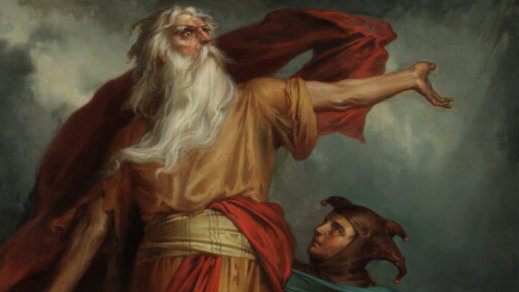
King Lear is a play by William Shakespeare. I absolutely love all things Shakespeare and wanted to produce a sort of audio drama style production of this play, and probably others in the future.
Please include your discord in your audition notes.
If there are multiple audition sides listed, please only read one of them.
There are a lot of male roles in this show, but don't let that limit you! Shakespeare is all about different perspectives and ideas put onto plays that are over 400 years old. So if you're interested in a role, audition regardless of the gender of the character.
MAKE BOLD CHOICES
I'm excited to hear from everyone, good luck!
FULL SCRIPT: https://www.opensourceshakespeare.org/views/plays/playmenu.php?WorkID=kinglear
Hello everyone! Thank you all so much for auditioning your talent is astounding! However due to lack of auditions I will be extending the deadline by a month.

 Voice Actor
The aging king of Britain and the protagonist of the play. Lear is used to enjoying absolute power and to being flattered, and he does not respond well to being contradicted or challenged. At the beginning of the play, his values are notably hollow—he prioritizes the appearance of love over actual devotion and wishes to maintain the power of a king while unburdening himself of the responsibility. Nevertheless, he inspires loyalty in subjects such as Gloucester, Kent, Cordelia, and Edgar, all of whom risk their lives for him.
Please choose one of the audition monologues.
Which of you shall we say doth love us most? That we our largest bounty may extend Where nature doth with merit challenge. Goneril, Our eldest-born, speak first.
We two alone will sing like birds i' th' cage. When thou dost ask me blessing, I'll kneel down And ask of thee forgiveness. So we'll live, And pray, and sing
 Voice Actor
Lear’s youngest daughter, disowned by her father for refusing to flatter him. Cordelia is held in extremely high regard by all of the good characters in the play—the king of France marries her for her virtue alone, overlooking her lack of dowry. She remains loyal to Lear despite his cruelty toward her, forgives him, and displays a mild and forbearing temperament even toward her evil sisters, Goneril and Regan. Despite her obvious virtues, Cordelia’s reticence makes her motivations difficult to read, as in her refusal to declare her love for her father at the beginning of the play.
Please choose one of the monologues.
We are not the first Who with best meaning have incurr'd the worst. For thee, oppressed king, am I cast down; Myself could else outfrown false Fortune's frown. Shall we not see these daughters and these sisters?
O my dear father, restoration hang Thy medicine on my lips, and let this kiss Repair those violent harms that my two sisters Have in thy reverence made!
 Voice Actor
Lear’s ruthless oldest daughter and the wife of the duke of Albany. Goneril is jealous, treacherous, and amoral. Shakespeare’s audience would have been particularly shocked at Goneril’s aggressiveness, a quality that it would not have expected in a female character. She challenges Lear’s authority, boldly initiates an affair with Edmund, and wrests military power away from her husband.
Sir, I love you more than words can wield the matter; Dearer than eyesight, space, and liberty; Beyond what can be valued, rich or rare; No less than life, with grace, health, beauty, honour; As much as child e'er lov'd, or father found; A love that makes breath poor, and speech unable. Beyond all manner of so much I love you.
Voice Actor
Lear’s middle daughter and the wife of the duke of Cornwall. Regan is as ruthless as Goneril and as aggressive in all the same ways. In fact, it is difficult to think of any quality that distinguishes her from her sister. When they are not egging each other on to further acts of cruelty, they jealously compete for the same man, Edmund.
Sir, I am made Of the selfsame metal that my sister is,70 And prize me at her worth. In my true heart I find she names my very deed of love; Only she comes too short, that I profess Myself an enemy to all other joys Which the most precious square of sense possesses, And find I am alone felicitate In your dear Highness' love.
 Voice Actor
A nobleman loyal to King Lear whose rank, earl, is below that of duke. The first thing we learn about Gloucester is that he is an adulterer, having fathered a bastard son, Edmund. His fate is in many ways parallel to that of Lear: he misjudges which of his children to trust. He appears weak and ineffectual in the early acts, when he is unable to prevent Lear from being turned out of his own house, but he later demonstrates that he is also capable of great bravery.
Hark, the Duke's trumpets! I know not why he comes. All ports I'll bar; the villain shall not scape; The Duke must grant me that. Besides, his picture I will send far and near, that all the kingdom May have due note of him, and of my land, Loyal and natural boy, I'll work the means To make thee capable.
 Voice Actor
Gloucester’s younger, illegitimate son. Edmund resents his status as a bastard and schemes to usurp Gloucester’s title and possessions from Edgar. He is a formidable character, succeeding in almost all of his schemes and wreaking destruction upon virtually all of the other characters.
Please note that "wherefore" means "why" in modern English.
Thou, Nature, art my goddess; to thy law My services are bound. Wherefore should Stand in the plague of custom, and permit The curiosity of nations to deprive me, For that I am some twelve or fourteen moonshines Lag of a brother? Why bastard? wherefore base?
Voice Actor
Gloucester’s older, legitimate son. Edgar plays many different roles, starting out as a gullible fool easily tricked by his brother, then assuming a disguise as a mad beggar to evade his father’s men, then carrying his impersonation further to aid Lear and Gloucester, and finally appearing as an armored champion to avenge his brother’s treason. Edgar’s propensity for disguises and impersonations makes it difficult to characterize him effectively.
Away! the foul fiend follows me! Through the sharp hawthorn blows the cold wind. Humh! go to thy cold bed, and warm thee.
 Voice Actor
A nobleman of the same rank as Gloucester who is loyal to King Lear. Kent spends most of the play disguised as a peasant, calling himself “Caius,” so that he can continue to serve Lear even after Lear banishes him. He is extremely loyal, but he gets himself into trouble throughout the play by being extremely blunt and outspoken.
Draw, you rascal! You come with letters against the King, and take Vanity the puppet's part against the royalty of her father. Draw, you rogue, or I'll so carbonado your shanks! Draw, you rascal! Come your ways!
Voice Actor
The husband of Lear’s daughter Goneril. Albany is good at heart, and he eventually denounces and opposes the cruelty of Goneril, Regan, and Cornwall. Yet he is indecisive and lacks foresight, realizing the evil of his allies quite late in the play.
Wisdom and goodness to the vile seem vile; Filths savour but themselves. What have you done? Tigers, not daughters, what have you perform'd?
Voice Actor
The husband of Lear’s daughter Regan. Unlike Albany, Cornwall is domineering, cruel, and violent, and he works with his wife and sister-in-law Goneril to persecute Lear and Gloucester.
I have receiv'd a hurt. Follow me, lady. Turn out that eyeless villain. Throw this slave Upon the dunghill. Regan, I bleed apace. Untimely comes this hurt. Give me your arm.
Voice Actor
Lear’s jester, who uses double-talk and seemingly frivolous songs to give Lear important advice.
Mark it, nuncle. Have more than thou showest, Speak less than thou knowest, Lend less than thou owest, Ride more than thou goest, Learn more than thou trowest, Set less than thou throwest; Leave thy drink and thy whore, And keep in-a-door, And thou shalt have more Than two tens to a score.
 Voice Actor
The steward, or chief servant, in Goneril’s house. Oswald obeys his mistress’s commands and helps her in her conspiracies.
This ancient ruffian, sir, whose life I have spar'd At suit of his grey beard-
Voice Actor
The man who ultimately agrees to marry Cordelia. The King of France looks past Cordelia’s lack of a dowry and instead accepts her for who she is as an individual. He also supports his wife in her attempts to save her father from her two sisters.
Thy dow'rless daughter, King, thrown to my chance, Is queen of us, of ours, and our fair France. Not all the dukes in wat'rish Burgundy Can buy this unpriz'd precious maid of me. Bid them farewell, Cordelia, though unkind. Thou losest here, a better where to find.
Voice Actor
A greedy nobleman who refuses to marry Cordelia after King Lear disowns her. The Duke of Burgundy admits that he is more interested in the land that Lear had set aside for his favorite daughter rather than Cordelia herself.
I am sorry then you have so lost a father That you must lose a husband.
Voice Actor
A courtier who acts as a messenger and servant. Curan brings Edmund key information about the growing antagonism between the Duke of Cornwall and the Duke of Albany.
And you, sir. I have been with your father, and given him notice that the Duke of Cornwall and Regan his Duchess will be here with him this night.
Voice Actor
There are many small servant type roles in this play that have very few lines. These include: Captain, Doctor, Gentleman, Herald, Knight, Messenger, Old Man, Servant 1, Servant 2, and Servant 3.
Say something that fits