Vessels: A Short Pilot
Lukash for Lorne
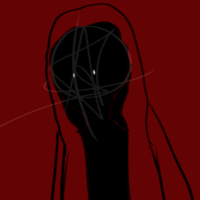

Role: The antagonist, a god responsible for the plague. Lorne is enigmatic and powerful, a being that is as old as the plague itself.
Backstory:
- Origin: Lorne was once a god of balance, overseeing life and death. However, their perception of “balance” became twisted when they began to view creation as something temporary, and destruction as the true force of life. Lorne became obsessed with the concept of erasure and began to sow chaos across the land, bringing with them a plague that wiped out entire civilizations. As a god of destruction, they saw the plague as a “cleansing,” eradicating what they considered to be imperfect life.
- Connection to Kiran: When Kiran’s village resisted the plague, they became an unexpected “vessel” for a cure. Lorne saw this as a threat, and thus cursed her, knowing she was the only one who could end the plague they had set in motion. Now, Kiran and Lorne are locked in a deadly dance of life and death.
- Personality: Lorne is cold, detached, and sees everything as part of a larger cycle of decay and rebirth. They don’t see themselves as evil, but rather as an inevitable force of nature. To them, Kiran and the plague are merely the next stage in existence. Lorne doesn’t hate Kiran; they view her as a necessary obstacle—something to be removed when the time is right.
Abilities: Lorne’s power lies in destruction and entropy. They can decay anything with a mere touch or thought, and their influence spreads like a dark fog, turning the environment around them into a decaying, barren wasteland. Their form can shift depending on their mood or power level, sometimes appearing as a humanoid figure draped in shadow, or as a vast, unknowable entity.
Visual Design:
- Appearance: Lorne’s form is always cloaked in a swirling, dark mist that distorts their true appearance. Their eyes glow like fading stars, and their voice is often heard as a distant echo. In more direct confrontations, they take on a more humanoid, skeletal form, wrapped in tattered robes, with symbols of decay etched into their skin.
- Symbolism: The motif of decay and rot is central to their design. They could have symbols of crumbling, breaking objects like cracked skulls, rotting leaves, or sand slipping through an hourglass.
- dark
- androgynous
- neutral
- Monotone
- Godly
- english (british)
Ah. well thou seem to summon me during this time of day, mine priest. I understand thou desire to convey a message?
Thou didst well, priest. I grant thou mine praise. Yet, we are not done.
Allow us just keep this conversation mutual, fine?