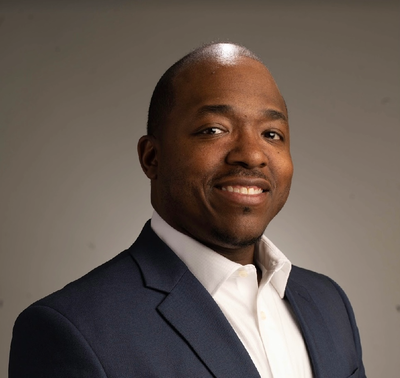
What Comes After: Faultlines Book Two
Kenneth for Nathan Weston


Role: Nathan Weston
Project context, compensation, timeline, and how I work with narrators are at the project level. Please read the project description before this role description.
Compensation: As per project (PFH $200—$300, negotiable based on experience).
About this roleNathan Weston has a few chapters in What Comes After and becomes a recurring POV from Book 3 onward. The exact scope of his future POV work isn't fully mapped yet (this is a long series, and Nathan's role keeps expanding as I write deeper into it), but the narrator who takes him on in WCA is being invited into ongoing work across multiple books should they choose to stay on.
The Faultlines audiobooks use a multi-narrator structure, with one narrator per POV character, consistent across the series. Nathan's narrator will be joining the ensemble already cast for The Weight of Silence (Book 1), which is in production now. That means an established team, an established sound, and direct working relationships with me across the books. (More on what working with me actually looks like at the bottom of this listing.)
This is not a one-book audition. I'm casting Nathan's voice for the series.
Who Nathan isNathan Weston is a Black man in his early fifties from West Baltimore, a captain in the Baltimore Police Department, nearly thirty years on the force. He's Logan Weston's father (Logan is one of the series's main characters and a primary POV in TWoS and WCA), husband to Dr. Julia Linae Miller Weston, and a man whose life has been built around steady authority, community-focused policing, and the quiet conviction that integrity is what you do when no one is watching.
He's a pragmatist first. The gruffness readers sometimes attach to him is the surface; underneath is a man who has spent a lifetime calculating which doors open and which doors close depending on what he says, what he does, and what he doesn't. His communication is direct and contained. His authority lives in calm, not volume. The "dad voice" he uses with his son communicates non-negotiable boundaries without ever being raised.
He grew up in West Baltimore during a period when watching friends die for being Black was part of being a Black boy in America. He went to Coppin State University, an HBCU in northwest Baltimore, joined the BPD, and has spent the rest of his career trying to be the kind of officer the institution wasn't designed to produce—community-rooted, ethics-forward, working from the inside to change a department with a serious history of racial harm. He raised Logan to be exceptional and to be careful, in equal measure. The two are not separable for him. They are the same project.
A full character brief and Series Bible material go to the chosen narrator before recording.
What Nathan sounds likeNathan's voice is one of the most specific things about him. The four load-bearing qualities:
Deep register, low baritone into bass. Nathan's voice sits below most adult male baritones—genuinely bass-leaning, with the resonance and weight that come with that depth. The voice carries physical mass on every syllable. A higher-pitched or standard-baritone narrator, however skilled, isn't right for this role. The depth is part of what makes Nathan's calm read as authority rather than mildness.
Resonant, weighted, contained. The voice doesn't have to do volume work to land; the depth does the work. Nathan's professional register is restrained, measured, and slow enough to give every word its weight. His "dad voice" gets quieter, not louder, when boundaries need to be set. The closest single real-world placement comp is Michael Clarke Duncan in his quieter registers (interview footage, his more contained on-screen work)—the bass-deep resonance, the slow gravity of delivery, the way restraint and warmth can coexist in the same sustained note. Duncan is a placement-and-depth comp specifically; he's not a rhythm or accent comp.
West Baltimore Black speech, register-shifting by context. Nathan's casual speech leans more AAVE—at home with Julia, with Logan in tender or intimate moments, with his uncles, in private—and his professional register tightens toward a more contained, BPD-captain-coded English when he's on the job, in command, or addressing the public. This is not code-switching as performance. It's the lived bilingual register of a Black professional in Baltimore, fluent in both, moving between them as the situation requires. A narrator who can only do one of those registers (always-AAVE or always-standard) will miss what makes Nathan sound like Nathan. The right narrator already lives this register-shift in their own daily life and won't have to think about it.
Authority that doesn't perform itself. Nathan's voice carries weight without claiming it. He doesn't push. He doesn't over-articulate. He doesn't dramatize. His delivery trusts the listener to track what he's saying without him having to underline it, and that trust is part of what makes the voice land. A narrator who reaches for "commanding" as a performance choice will overshoot; a narrator who plays the depth and the calm honestly will arrive there without trying.
The full voice and dialect detail goes to the chosen narrator with the Series Bible.
A note on Nathan's role in WCA specificallyNathan's WCA role is small but high-stakes, built around a defining-moment scene—the kind of scene that decides what readers carry of him into the books that follow. The audition is testing for the craft demands that scene requires: sustained composure under devastating circumstance, the dual register where contained BPD-captain English and personal devastation collide in the same moment, restraint that has to communicate weight without volume, and a Black father's specific way of carrying impossible weight in public.
I'm not going to detail the scene here for spoiler reasons. The full beat goes to the narrator at hire, with all the manuscript context they'll need. What you need to know going in: the audition is asking you to perform a man who has trained himself into composure as a survival skill, having to hold that composure while something is breaking him from inside. If that craft demand sounds like the work you want to be doing, audition.
Why Nathan matters to meEvery character in this series matters to me, and Nathan is one of the ones I love most. Getting his casting right carries a particular weight, though, because Nathan is a Black character and I am not Black. Writing him is a responsibility I take seriously, and casting him is part of that responsibility, not separate from it.
Nathan is a Black father and a high-ranking Baltimore police captain, working inside a department historically known for serious and well-documented racial harm. His arc through the series is the fine line he walks every day—not just as a Black man in America who watched friends be killed just for being Black as a boy, but as a Black father and a police officer, having to walk both sides of that line, praying that his own colleagues aren't the reason he gets the call saying something happened to his son. He taught Logan how to carry himself—what to say, what to do, what not to do—in the desperate hope that it would be enough.
That's the man the narrator is being asked to voice. Across this book and the books that follow, Nathan moves through a world that asks impossible things of him every day, and his composure is hard-won and culturally specific.
I want to be honest about something I'm watching in my readership right now. Nathan in The Weight of Silence is filtered through Logan's POV during a high-stress year of Logan's life, which means readers meet Nathan through the surface—the gruff no-nonsense dad, the steady authority, the high expectations of a high-achieving son. Some readers want more of him. Some readers misunderstand him, and I understand why; the surface is the part the book gives you in TWoS, and the architecture underneath isn't visible until later books expand his POV. Nathan is a pragmatist first, not a stern-father archetype, and the calm is doing a different kind of work than it looks like it's doing from outside. The right narrator is going to be one of the things that helps Nathan land as the full person he is, not just the version Logan's stress-year filtered through.
The right narrator will also already know this about him. A Black man reading this casting call won't need me to explain why Nathan does what he does as a Black man. The understanding is prior to the performance. That's not a small thing—it's the load-bearing reason this casting is non-negotiable, and it's the thing that makes the difference between a skilled performance and a true one.
That's why I'm uncompromising. For The Weight of Silence, I held auditions open for Logan and Julia Weston specifically until I found Black narrators for those roles, and I turned away many white narrators for those roles because they were white. Nathan is held to the same standard. I'm not interested in "I'm not Black, but..." pitches for this role. I will not be persuaded out of this requirement, no matter how strong the audition is on craft grounds. If you submit an audition for Nathan and you are not Black, I will not respond. I'm naming that directly so we can both save the time.
Casting early is part of how I'm protecting this. I'd rather wait months for the right narrator than fill the role to meet a calendar.
If you're a Black narrator reading this and recognizing something in Nathan—in the line he walks, in the way his calm carries weight, in the survival skills passed from father to son, in the daily cost of inhabiting both his roles at once—please audition. That recognition is exactly what I'm looking for.
What I'm looking forIdentity requirements- Black narrator. Required, non-negotiable. (See "Why Nathan matters to me" above for the full context on why this isn't flexible.)
- Native fluency in West Baltimore Black speech, with natural register-shifting between casual AAVE and contained-professional English. This is a hard requirement, not a preference. Narrators from elsewhere in the Black-American-English landscape (Southern, AAVE-fluent but non-Baltimore-coded, etc.) may still be a good fit if the register-shift work is native and the rhythm reads as Baltimore-adjacent rather than regionally specific elsewhere—but Baltimore-rooted speakers are very strongly preferred.
- A speaking voice in the deeper register described in "What Nathan sounds like" above. Low baritone into bass. This is a hard requirement, not a preference.
- Comfortable with register-shifting between casual AAVE and contained-professional English without flattening either or making the shift sound like performance.
- Range that holds composure across high-stakes emotional terrain—restraint as a craft tool, not as a default.
- Ability to perform authority without performing it—depth and calm doing the work, not volume or emphasis.
- Ability to perform devastation while holding composure (see the WCA-role note above).
- Audiobook experience strongly preferred; relevant voice acting credits considered.
I am not looking for performance from the outside. I'm looking for someone who understands Nathan from within.
AuditionA short passage from a Nathan POV chapter in What Comes After. The passage will test:
- Register-shifting (casual AAVE flexing against contained-BPD-captain English).
- Composure-while-devastated (the dual register where restraint and emotional weight coexist in the same scene).
- Authority without performance (the calm that lands as weight without ever being underlined).
[Audition script and full submission instructions to follow.]
Timeline, working-relationship details, and overall project context are at the project level. If Nathan's voice resonates with you and you've read the project description, I'd love to hear you read.
- english
- male adult
- black american
- west Baltimore
The heat came up through the soles of his boots before it ever reached his face. That was the thing about a Baltimore July—it didn't fall on you from the sky so much as rise off the rowhouse brick and the buckled asphalt, soaking up through him until the vest under his uniform sat like a second skin he couldn't shrug off. Nathan had stopped fighting it years ago. He set his pace slow enough that people could see him coming, fast enough that nobody mistook him for standing still. Officer Tran kept half a step behind him, sweating through her collar and pretending she wasn't. She was three weeks out of the academy and still walked like the sidewalk owed her an explanation. "You can ease up," he said, not turning his head. "Sir?" "Your shoulders are up around your ears. Nobody on this block is going to hurt you." "How do you know that?" "Because I know this block." He tipped his chin toward the carry-out on the corner, where the screen door hung open and the smell of fried whiting drifted out warm enough to taste. "And this block knows me. That's the whole job, Tran. Everything else is paperwork." She didn't answer, which he counted as progress. The good ones learned to sit with a thing before they argued with it. "Captain Weston." Miss Delores had come out onto the steps of the carry-out with a dish towel over one shoulder and her reading glasses pushed up into her hair, and the sight of her loosened something the heat had cinched tight under his vest. She was seventy-one and ran that kitchen like a precinct of her own; she'd fed half this neighborhood through two recessions and one bad winter when the gas company got greedy. "Miss Delores." He took the three steps up to her like a man coming home. Her hand found his forearm and squeezed, the palm dry and papery and stronger than it had any right to be. "You look tired," she said, which was her way of saying she loved him. "I look fifty-two." "Mm. Same thing." She studied his face the way Julia did when she thought he was holding something back, and he stood still under it, because you didn't flinch from Miss Delores, any more than you'd flinch from your own mother. "Those boys leave yet?" There it was. The thing he'd been carrying under the vest all morning, heavier than the heat. "End of August," he said. "Logan down to Howard. Jacob up to New York." "Juilliard." She said the word carefully, like it might break. She'd heard Jacob play once, at a church thing, and she still talked about it. "That child got the hands of God in him." "He does." "And you lettin' him go all that way." It wasn't an accusation. It was a marvel. "He earned the going." He kept it out of his voice, the pride and the dread both. The house was going to be quiet come September—two doors that wouldn't slam. He'd spent seventeen years learning to read Logan through the floorboards, the careful and even footsteps, the lamp clicking off too late, and only these last eight months learning Jacob's—quick, light, always angled toward the nearest exit, bracing for a safety the boy still didn't trust to hold. Now the house was going to teach him a third sound, the sound of neither of them in it. He already knew he wouldn't like it. "You tell Jacob he come to me before he leaves," Miss Delores said. "I'm sending food." "He'd carry it on the train if you packed it." She swatted him with the towel and went back inside. He let himself have the half-second of it—the warmth, the belonging, the old woman who'd known him since he walked this beat as a rookie no steadier than Tran. Then he heard the voices. At the market two doors down, a voice was climbing, sharp, and under it something younger trying to stay low and not managing it. Tran's hand had already drifted to her belt. "Off," he said—quiet, not a request. Her hand came off the belt. "We walk in slow." He was moving already, his stride lengthening while his face went still and open, the way you came up on a spooked animal or a scared kid or any human being whose worst day you'd walked into the middle of. "We don't fill the doorway. We don't raise our voices to be heard over theirs—we wait for theirs to come down to ours. Understand?" "Yes, sir." Hassan had a teenager by the collar of his shirt. The boy was maybe fourteen, all elbows and shame, and there was a sleeve of cookies crushed in his fist like he'd grabbed it on instinct and then found he had nowhere on God's earth to put it. A few people had stopped on the sidewalk to watch, drawn by the heat and the noise and the old human appetite for somebody else's trouble. "Captain—he took it, I saw him, third time this week somebody been—" "Mr. Hassan." Nathan said the name the way you set a flat hand on a table—not loud, just there. "Let go of his shirt for me." Hassan let go. The boy didn't run. That told Nathan most of what he needed. A kid who meant harm ran; a kid who was hungry and ashamed stayed and waited to be told what he already believed about himself. Nathan crouched—the knee complaining, the heat pressing on the back of his neck—until he was under the boy's eyeline instead of over it. "What's your name?" The boy's jaw worked. "Dré." "Dré." Nathan looked at the cookies and not at the boy's face, because sometimes you gave a person somewhere to put their eyes that wasn't yours. "You eat today?" The silence had a particular shape, and Nathan knew the shape. He'd spent eight months in a house with a boy who wore it at the dinner table—who hid food in his room because some part of him still couldn't trust there'd be more tomorrow. A few weeks back he'd driven that boy three and a half hours up I-95 to look at the school that was going to have him, the radio turned low, the two of them facing the windshield because facing each other was still more than Jacob could do. They'd stopped at a diner on Amsterdam Avenue and the boy had gone still over the menu—too many choices and no map for which ones he was allowed to want—and Nathan had ordered for both of them and not made a thing of it. Just handled it, the way you handled a kid who'd learned that saying a need out loud had only ever cost him. In eight weeks Jacob was going to walk into Juilliard and put his hands on a piano in front of people who knew exactly what they were hearing. He'd come up out of a corner not so different from this one. Nathan stood. His chest gave a tight pull as he came up—a fist closing and opening behind the sternum, there and gone. He noted it like weather and filed it, keeping his face exactly where it was. "Mr. Hassan, what's the cookies run?" "That's not—Captain, it's the principle—" "I agree with you about the principle." He did, too; that was the part people never expected, that he could agree with you and still not let you do the wrong thing. "So here's what we'll do." He drew his wallet and laid bills on the counter, more than the cookies, enough for a real meal. "You feed this young man today, on me. And Dré—" he turned back to the boy "—you come in the front and ask, every time. Mr. Hassan's going to find you work. Sweeping. Stocking. You earn it, you don't take it. We square?" The boy's eyes came up at last, wet and furious and ten years old under the fourteen. "Why," he said—not a question so much as a wound. None of the rest of it was for a fourteen-year-old on a hot sidewalk, so he kept it behind his teeth. Somebody had done this for one of his, once. The system built to catch a kid like Dré dropped more than it ever held, and one of those dropped kids was asleep under his roof right now, eight weeks from leaving for a conservatory. "Because I think you're worth the trouble," he said instead. "Prove me right." He walked back out into the heat, Tran trailing, the little knot of watchers already coming apart now that there was nothing left to see—no cuffs, no spectacle, no story worth telling, just a kid fed and a captain who'd known everybody's name. "Sir," Tran said, after a block. "We could've charged that." "We could have." "Then why didn't we?" He considered it, because she'd asked it straight and a straight question earned a real answer. The pull behind his sternum had faded. The boys were home right now, packing—Logan folding things into squares, Jacob most likely at the keys instead of his suitcase, running out the clock on a city he'd survived and was finally allowed to leave. "Because I can charge a hungry kid and clear a complaint, or I can give him a reason to wave at me next year," he said. "I can't do both. The badge'll let you pick the first one all day long. The job's the second one." He glanced at her. "You'll see." She was quiet the rest of the walk-through. He counted that, too, as progress.